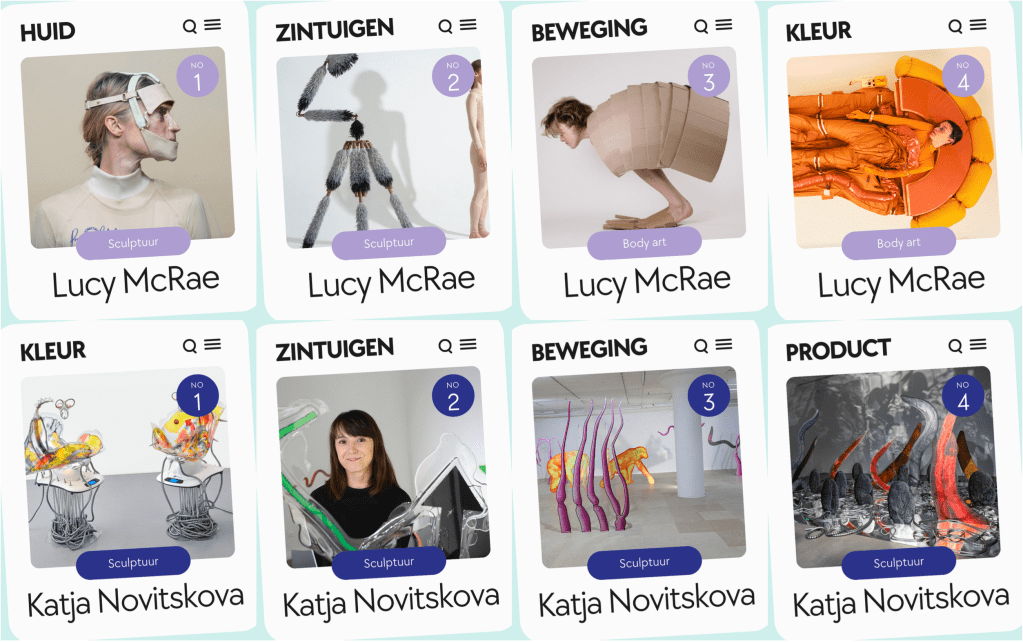
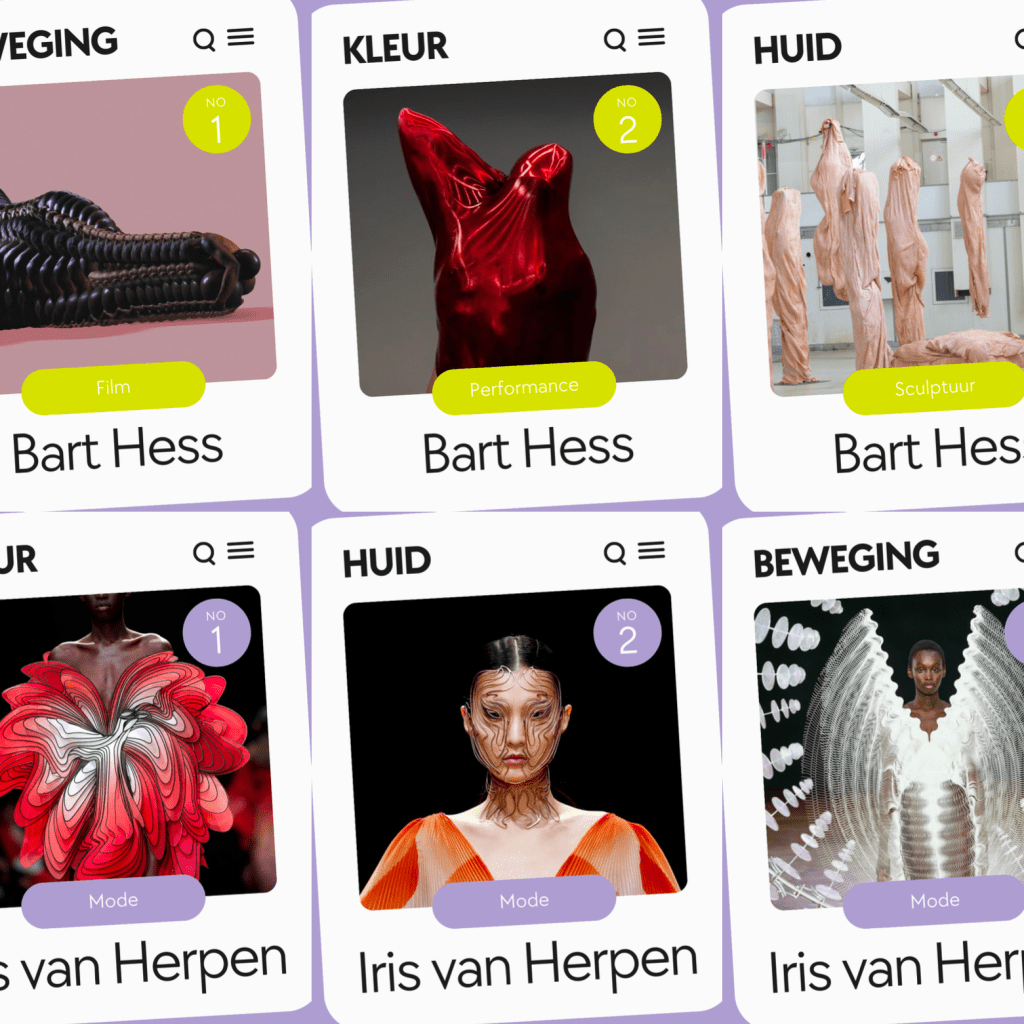
In collaboration with Hanneke Honigh and Brenda Kout, I developed this educational card game as part of CULTCANDY Magazine No. 1. The game introduces players to artists whose work blends technology with animal-inspired ideas. The game is suitable for use in the classroom, at home, or with friends- by teachers, parents, or students themselves. Download, print, and play to discover artists like Iris van Herpen, Lucy McRae, and Theo Jansen.
How to play
Essential tools for an engaging and educational experience:
- CultCandy Magazine No. 1 – Technology section (pages 18–43)
This feature explores the relationship between art, technology, and animal inspiration. It highlights artists whose work integrates technological elements and draws from animal characteristics. - 4 sets of 20 Animal & Tech playing cards
The cards are divided into four fascinating categories inspired by animal traits: Skin, Movement, Senses, and Product. - Game Manual
Includes clear instructions and objectives to help you get started. - Printables
The playing cards and manual are available as free downloads at the bottom of this page. - Printer and sturdy paper
For best results, print the cards on thick paper. Optionally, use a laminating machine to make them more durable.
Preparation:
Make sure you have the Quartet card game, the game manual, and the magazine on hand.
Starting the game:
Shuffle the cards and deal them evenly to all players. The goal is to collect sets of four cards featuring the same artist- for example, four ‘Iris van Herpen’ cards or four ‘Lucy McRae’ cards.
Game play:
The youngest player begins by asking another player for a specific card they need to complete a set. For example:
“Do you have the card about movement by Philip Beesley?”
Card exchange:
If the other player has the requested card, they must hand it over- but only if the requesting player can share a fact about the artist.
Example:
“I’d like the Theo Jansen card about movement. It’s about movement because he creates beautiful Strandbeests that walk along the beach powered by the wind.”
If the player doesn’t have the card, or if no fact is given, the turn ends and the next player continues.
Complete set:
When a player collects all four cards in a category, they place the set (quartet) on the table.
The winner:
The game continues until all sets are completed. The player with the most quartets at the end wins.
So- dig into the magazine, learn all you can about the featured artists, and give it your best shot. Good luck and have fun!
I would appreciate your perspective on this. Please feel free to share your thoughts in the comments section—your feedback is valuable to me.
© [2024] [Lisa Kuiper]. Alle rechten voorbehouden. Mag niet worden gebruikt, aangepast of gekopieerd zonder toestemming.
 Lisa Kuiper